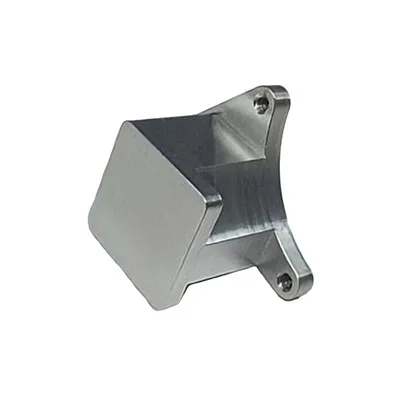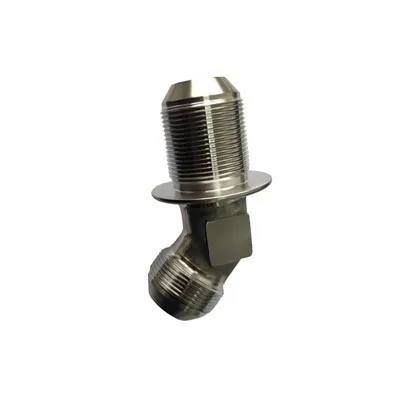

Hey there! I'm a supplier in the reducer housing processing business. Today, I'm gonna chat about the pricing strategies for our reducer housing processing products.
Cost - Plus Pricing
Let's start with cost - plus pricing. It's one of the most straightforward methods. First, we figure out all the costs involved in making the reducer housing. This includes the cost of raw materials, like the metal or alloy we use. For example, if we're using high - quality steel, it's gonna cost more than a lower - grade one.
Then, there are the labor costs. Our skilled workers spend hours machining, shaping, and finishing the housing. We need to pay them fairly for their time and expertise. Next comes the overhead costs. This covers things like the rent for our workshop, the cost of electricity, and the maintenance of our machinery.
Once we've added up all these costs, we add a profit margin. The profit margin is basically the amount of money we want to make on each product. It can vary depending on the market conditions and our business goals. If the market is competitive, we might have to keep the profit margin a bit lower to attract customers. But if our products have unique features or high - end quality, we can set a higher profit margin.
The advantage of cost - plus pricing is that it's simple and easy to understand. We know exactly how much it costs to make the product, and we can ensure that we're making a profit. However, the downside is that it doesn't really take into account the customer's perception of value. Just because we've spent a lot of money making the product doesn't mean the customer is willing to pay that price.
Value - Based Pricing
Now, let's talk about value - based pricing. This strategy focuses on the value that the customer perceives in our reducer housing. We need to understand what the customer really wants and how our product can meet those needs.
For example, if our reducer housing is more durable than others in the market, it can save the customer money in the long run because they won't have to replace it as often. Or if it has better precision, it can improve the performance of the entire reducer system. These are the values that we can use to set our price.
We also need to consider the customer's budget and the price of competing products. If our product offers more value than the competition, we can charge a higher price. But we have to be careful not to price ourselves out of the market.
Value - based pricing allows us to capture the true value of our product. It can lead to higher profits if we can effectively communicate the value to the customer. However, it can be more difficult to implement because it requires a deep understanding of the customer and the market.
Competitive Pricing
Competitive pricing is another important strategy. We keep an eye on what our competitors are charging for similar reducer housing products. If our competitors are offering a lower price, we might have to lower ours to stay competitive. On the other hand, if our product has some unique features or better quality, we can charge a premium price.
There are different ways to approach competitive pricing. We can match the price of our competitors, which is a safe strategy. It ensures that we don't lose customers because of price. But it also means that we might not be able to make as much profit as we could if we differentiated our product.
We can also set a price slightly lower than our competitors to attract price - sensitive customers. This can help us gain market share, but we need to make sure that we can still cover our costs. Or we can set a higher price if our product is clearly superior.
The key to competitive pricing is to constantly monitor the market and adjust our prices accordingly. We need to be flexible and responsive to changes in the competitive landscape.
Psychological Pricing
Psychological pricing is all about how the customer perceives the price. For example, instead of charging $100 for a reducer housing, we might charge $99. This small difference can make the product seem more affordable to the customer, even though the actual difference is only one dollar.
Another aspect of psychological pricing is using price tiers. We can offer different levels of reducer housing products at different prices. For example, we can have a basic model at a lower price for customers who are on a tight budget, and a premium model with more features at a higher price for customers who are willing to pay for quality.
This strategy can influence the customer's buying decision. It gives them options and makes them feel like they're getting a good deal, no matter which product they choose.
Dynamic Pricing
Dynamic pricing is a more advanced strategy. It involves adjusting the price of our reducer housing products in real - time based on various factors. For example, if the demand for our products is high, we can increase the price. If the demand is low, we can lower the price to stimulate sales.
We can also consider factors like the time of day, season, and even the customer's location. For example, if we know that customers in a certain region are more price - sensitive, we can offer them a lower price.
Dynamic pricing requires a lot of data and analytics. We need to be able to track the market trends, customer behavior, and other relevant factors. It can be a powerful strategy to maximize our profits, but it also requires a significant investment in technology and expertise.
Pricing for Different Customer Segments
We also need to consider different customer segments when setting our prices. For example, large industrial customers might have different needs and budgets compared to small - scale businesses.
Large industrial customers often buy in bulk. We can offer them volume discounts to encourage them to place larger orders. This can help us increase our sales volume and reduce our per - unit costs.
Small - scale businesses, on the other hand, might be more price - sensitive. We can offer them more affordable options or payment plans to make our products more accessible.
We can also target different industries. For example, the automotive industry might have different requirements and price sensitivities compared to the aerospace industry. By understanding the specific needs of each industry, we can set more appropriate prices.
Impact of Pricing on Market Position
Our pricing strategy can have a big impact on our market position. If we set our prices too high, we might lose customers to our competitors. But if we set our prices too low, we might be seen as a low - quality provider.
A well - thought - out pricing strategy can help us build a strong brand image. If we can offer high - quality products at a reasonable price, we can attract more customers and gain a good reputation in the market.
We also need to consider the long - term effects of our pricing. For example, if we lower our prices too much to gain market share, we might not be able to sustain our business in the long run. On the other hand, if we set our prices too high, we might miss out on potential customers.
Conclusion
In conclusion, there are many different pricing strategies for reducer housing processing products. Each strategy has its own advantages and disadvantages, and we need to choose the one that best suits our business goals, the market conditions, and the needs of our customers.
Whether it's cost - plus pricing, value - based pricing, competitive pricing, psychological pricing, dynamic pricing, or pricing for different customer segments, we need to be flexible and willing to adjust our prices as the market changes.
If you're interested in Reducer Output Shaft Processing, CNC Machined Housing, or Valve Body CNC Machining, or if you want to discuss the pricing of our reducer housing products further, don't hesitate to reach out for a procurement discussion. We're here to provide you with the best products at the most suitable prices.
References
- Kotler, P., & Armstrong, G. (2019). Principles of Marketing. Pearson.
- Nagle, T. T., & Holden, R. K. (2002). The Strategy and Tactics of Pricing: A Guide to Growing More Profitably. Prentice Hall.